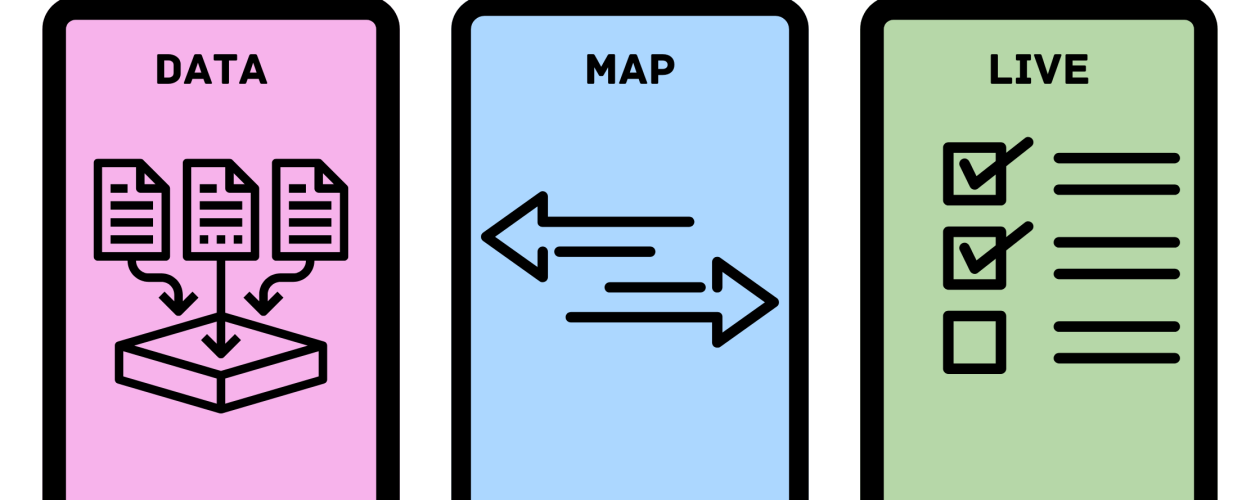
Whether you're moving your website to a new domain, redesigning it, or combining several websites, our SEO migration checklist will help you maintain visibility in search engines and keep organic traffic. Website migrations can be tricky, but with the right steps, you can keep your website successful in search results.
If you need professional SEO Migration Services, contact us here. Our experts can save you time and prevent common mistakes, ensuring a smooth migration.
SEO Migration Checklist ( Free Download )
Use this interactive checklist to track your progress through each phase of the migration. Tick off items as you complete them, then click "Free Download" to save a copy to your device.
Types of Website Migrations
Not all migrations are the same. Each type carries different levels of SEO risk and requires different preparation. Understanding which type of migration you're undertaking will help you focus on the right priorities.
Domain Change
Moving from one domain to another (e.g., oldbrand.com to newbrand.com). Highest SEO risk. Requires comprehensive 301 redirect mapping, Google Search Console change of address, and backlink outreach to update referring domains. Expect 2-3 months for full recovery. If the migration involves restructuring between ccTLDs, subdomains or subdirectories for international markets, read our guide to international SEO domain strategy before finalising your URL architecture.
Platform Change
Switching CMS or platform (e.g., WordPress to Shopify, Magento to WooCommerce). High SEO risk. URL structures often change significantly. Focus on URL mapping, preserving metadata, and ensuring the new platform handles canonical tags, schema markup, and sitemaps correctly.
HTTP to HTTPS
Migrating from HTTP to HTTPS. Lower risk but still important. Ensure all internal links, canonical tags, sitemaps, and hreflang tags point to the HTTPS version. Update Google Search Console property and redirect all HTTP URLs to HTTPS equivalents.
URL Restructure
Changing URL paths without changing the domain (e.g., flattening categories, renaming slugs). Medium SEO risk. Requires precise redirect mapping. Particularly important for e-commerce sites with deep category structures that need simplification for better crawlability.
Site Merge
Combining multiple websites into one (e.g., merging regional sites or brands). High SEO risk. Watch for duplicate content, conflicting canonical tags, and keyword cannibalisation. Consolidate backlink equity through proper redirects and choose the strongest domain as the primary.
Site Redesign
Changing the look, layout, and user experience while keeping the same domain and URLs. Lower SEO risk if URLs stay the same, but be careful with changes to content, internal linking, page speed, and JavaScript rendering. Always compare on-page content before and after.
Recommended Migration Timeline
A well-planned migration typically takes 8-12 weeks from start to recovery. Rushing the process is one of the most common causes of SEO problems. Here is a recommended timeline:
1. Data Gathering
Gather important information about your current site before migrating. Use this to compare the old site with the new one after migration.
- Run a Full Website Crawl: Use tools like DeepCrawl, JetOctopus, or Screaming Frog to collect data on URLs, broken links, redirects, and duplicate content. This helps identify issues and ensures all pages are properly accounted for.
- Identify Top-Performing Pages: Use Google Search Console to find pages with the most traffic. These pages are critical for maintaining overall site performance after migration.
- Website Loading Speed Report: Create a report on your website's speed using Google Speed Insights or GTMetrix. A fast website improves user experience and reduces bounce rates.
- Benchmark Keyword & Traffic Data: Collect data on keyword rankings and traffic using tools like Ahrefs or SEMrush. This helps you track changes after migration.
- Record Backlinks Data: Track backlinks if changing domains. Update the links to maintain your site's authority.
2. Design/Wireframe Stage Review
Ensure the new site retains key SEO elements during the design and wireframe stage.
- URL Mapping: Match all old URLs to new ones. For example, map
/about-usto/aboutif the content is similar. - Content Gap Analysis: Compare old and new pages to ensure nothing is missing.
- Metadata Review: Check all meta titles, descriptions, and header tags (H1) to ensure they are correct and optimized.
- Run a Crawler on the Staging Site: Run a crawler to ensure there are no major errors and test core web vitals and loading speed.
3. Pre-Launch Checklist
Ensure the new website is ready to go live without technical issues.
- Fix Technical Issues and Content Gaps: Resolve all issues before launching to avoid hurting SEO.
- Prepare URL Redirection Matrix: Set up 301 redirects for all changed URLs to maintain SEO.
- Review Tracking Codes, Canonical Tags, and Structured Data: Verify that all tracking codes and structured data are set up correctly.
4. Launch Day Checklist
Make sure everything is in place for a smooth migration.
- Remove "noindex" and "nofollow" Tags: Ensure these tags are removed so Google can crawl and index your new site.
- Domain Change in Google Search Console: Update the domain in Google Search Console and verify ownership if changing domains.
- Check Robots.txt and Redirects: Ensure robots.txt allows search engines to access important parts of the site and that redirects work correctly.
- Submit a New Sitemap: Submit an updated sitemap to Google Search Console to help index new pages faster.
5. Post-Migration Evaluation (1-2 weeks)
Monitor your new website's performance to identify and fix any issues.
- Monitor Google Search Console Index Coverage: Track indexed pages and fix errors like 'Submitted URL not found (404)' and 'Redirect error.'
- Use URL Inspection Tool for Top-Performing Pages: Ensure key pages are indexed properly and request indexing if needed.
- Monitor Performance Changes: Compare new data with benchmarks using tools like Google Analytics, Ahrefs, or SEMrush. It's normal for rankings to change after migration.
SEO Migration Tool Comparison
Choosing the right tools is critical for a smooth migration. Here is a comparison of the most popular tools used during each phase of an SEO migration:
| Tool | Best For | Pricing | Pros | Cons |
|---|---|---|---|---|
| Screaming Frog | Full site crawling, redirect mapping, technical audits | Free (500 URLs) / £199/yr | Comprehensive, industry standard, desktop-based | Steep learning curve, resource-heavy for large sites |
| Ahrefs | Backlink tracking, keyword benchmarking, competitor analysis | From $99/mo | Excellent backlink database, rank tracking, content explorer | Higher cost, limited crawl features vs. dedicated crawlers |
| SEMrush | All-in-one SEO, keyword tracking, site auditing | From $129.95/mo | Comprehensive toolkit, position tracking, site audit tool | Can be expensive, data limits on lower plans |
| Sitebulb | Visual site audits, accessibility checks, detailed reports | From $13.75/mo | Visual reporting, prioritised hints, easy to use | Windows/Mac only, less known than Screaming Frog |
| Google Search Console | Index monitoring, URL inspection, sitemap submission | Free | Direct from Google, essential for monitoring, free | Limited historical data, delayed reporting |
| JetOctopus | Large-scale crawling, log analysis, JavaScript rendering | From $50/mo | Cloud-based, handles millions of URLs, log file analysis | Less suited for small sites, requires GSC integration |
| SEO Migrator | URL mapping, content gap analysis, bulk redirect checking | Free | AI-powered URL matching, content similarity scoring, bulk processing | Focused solely on migration tasks, newer tool |
What to Expect After Migration: Week-by-Week Recovery Timeline
One of the biggest concerns during a migration is how long it takes for rankings to recover. Here is a realistic week-by-week breakdown of what to expect. Understanding this timeline helps you distinguish between normal post-migration fluctuations and actual problems that need attention.
Initial Fluctuations
Expect ranking drops and fluctuations as Google recrawls and reindexes your site. This is completely normal. Some pages may temporarily disappear from search results.
- Monitor Google Search Console daily
- Fix any 404 errors immediately
- Verify redirects are working
- Do NOT make additional changes to the site
Stabilisation Begins
Rankings should start to stabilise. Google has reprocessed most of your redirects. You may still see some pages fluctuating, but the overall trend should be improving.
- Compare traffic data with pre-migration benchmarks
- Request indexing for any pages still not indexed
- Check for crawl errors in Search Console
- Begin updating key backlinks to new URLs
Recovery & Growth
Most rankings should have recovered to pre-migration levels or better. If the new site has improved content and technical performance, you may see gains.
- Full performance comparison with benchmarks
- Reach out to remaining referring domains to update links
- Optimise any underperforming pages on the new site
- Document learnings for future migrations
Full Recovery Expected
If rankings have not recovered by this point, investigate further. Check for missed redirects, lost backlinks, content differences, or technical issues on the new site.
- Audit any pages still below pre-migration levels
- Consider content improvements for underperforming pages
- Review Core Web Vitals on new site
- Celebrate a successful migration!
When should you worry? If after 8 weeks you have not seen meaningful recovery, there is likely a deeper issue. Common culprits include broken redirect chains, missing content on new pages, lost backlinks, or technical problems like slow load times or rendering issues. Contact our team for a post-migration audit.
Extra Tips for a Successful SEO Migration
- Communicate with Stakeholders: Keep everyone informed about progress, risks, and expectations.
- Test, Test, Test: Test during staging and after launch on different devices and browsers.
- Prepare a Rollback Plan: Have a plan to revert to the old site if needed.
- Avoid Making Other Changes: Do not launch a new marketing campaign, change your content strategy, or redesign other pages at the same time as the migration. Isolate variables so you can measure the migration's impact accurately.
- Schedule the Migration Wisely: Avoid migrating during your busiest sales period. Choose a low-traffic window and ideally migrate on a weekday morning so your team is available to fix issues quickly.
Conclusion
Migrating your website can be challenging, but following this comprehensive SEO Migration Checklist will make the process smoother and help you keep your search rankings. Proper planning and monitoring can help avoid problems and ensure your new website performs well.
Migrating a website while maintaining SEO performance can be tough, but with a solid plan, or the support of SearchMinistry's SEO Migration Services, you can succeed and even improve your SEO rankings, creating a better experience for users and search engines.

Tharindu Gunawardana
Founder & Director, SearchMinistry Media
Tharindu Gunawardana is the Founder of SearchMinistry Media and a search strategist with 17 years of experience across Sri Lanka, Singapore, and Australia. A former Agency SEO Director, he specialises in helping brands transition from traditional SEO to AI-driven discovery. He is the creator of proprietary tools including Brandonomy.ai and SEOMigrator.io, focused on measuring and improving brand visibility within generative AI systems.