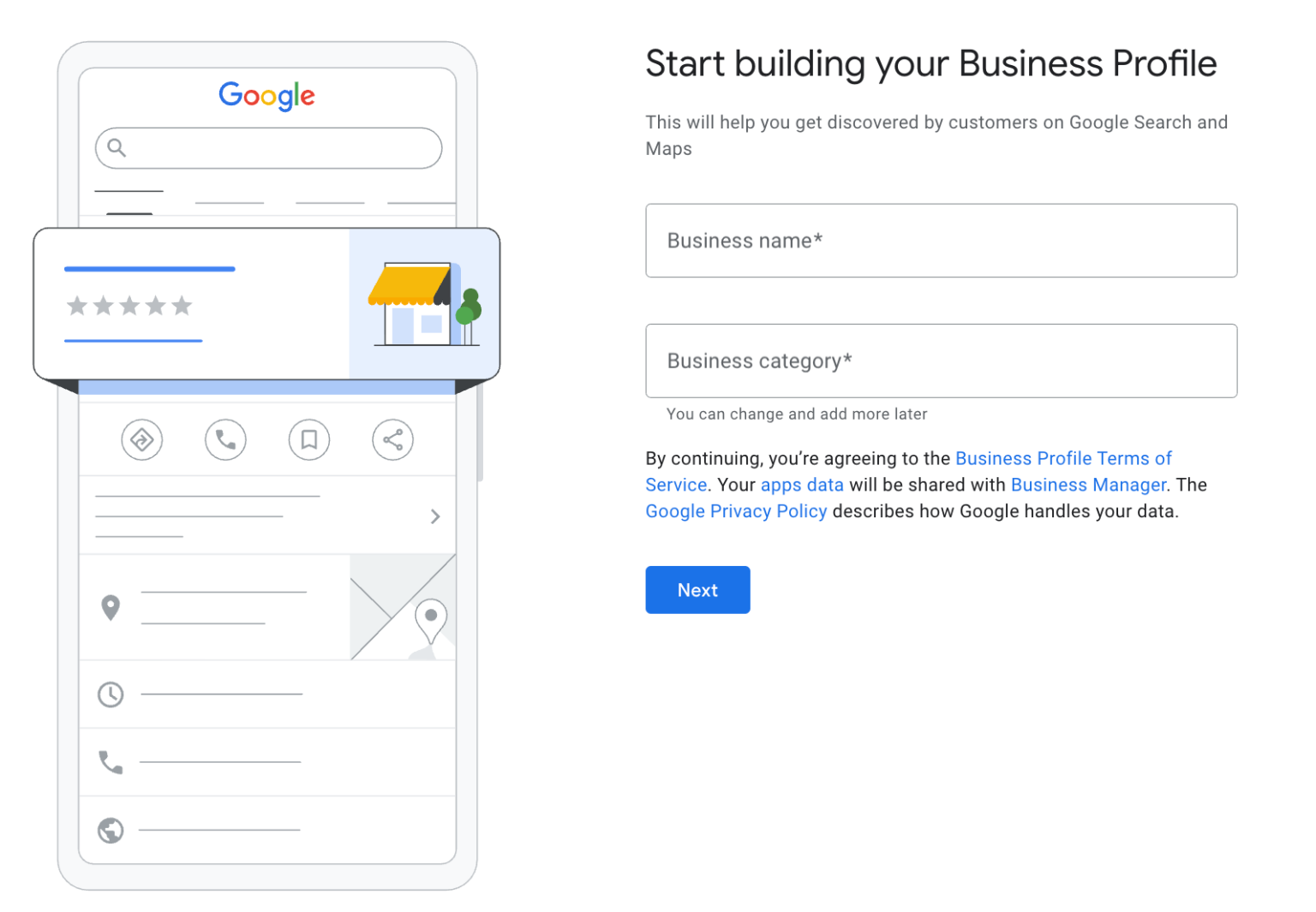
To create a Google Business Profile (formerly Google My Business), visit google.com/business and sign in with a Google Account. Enter your business name and select a primary category. Add your physical address or define a service area if you don't serve customers at your location. Input your phone number and website, then choose a verification method.
The most common method is a postcard sent to your address with a code, which confirms your location and unlocks full profile management. This process is free and essential for local visibility on Google Search and Maps.
Follow these steps precisely to ensure your profile is set up correctly from the very beginning.
Step 1: Go to the Official Google Business Profile Page
Navigate to google.com/business and click the "Manage now" button. You will be prompted to sign in with a Google Account. It's best practice to use an email address associated with your business rather than a personal one. Email must be linked to a Gmail account.
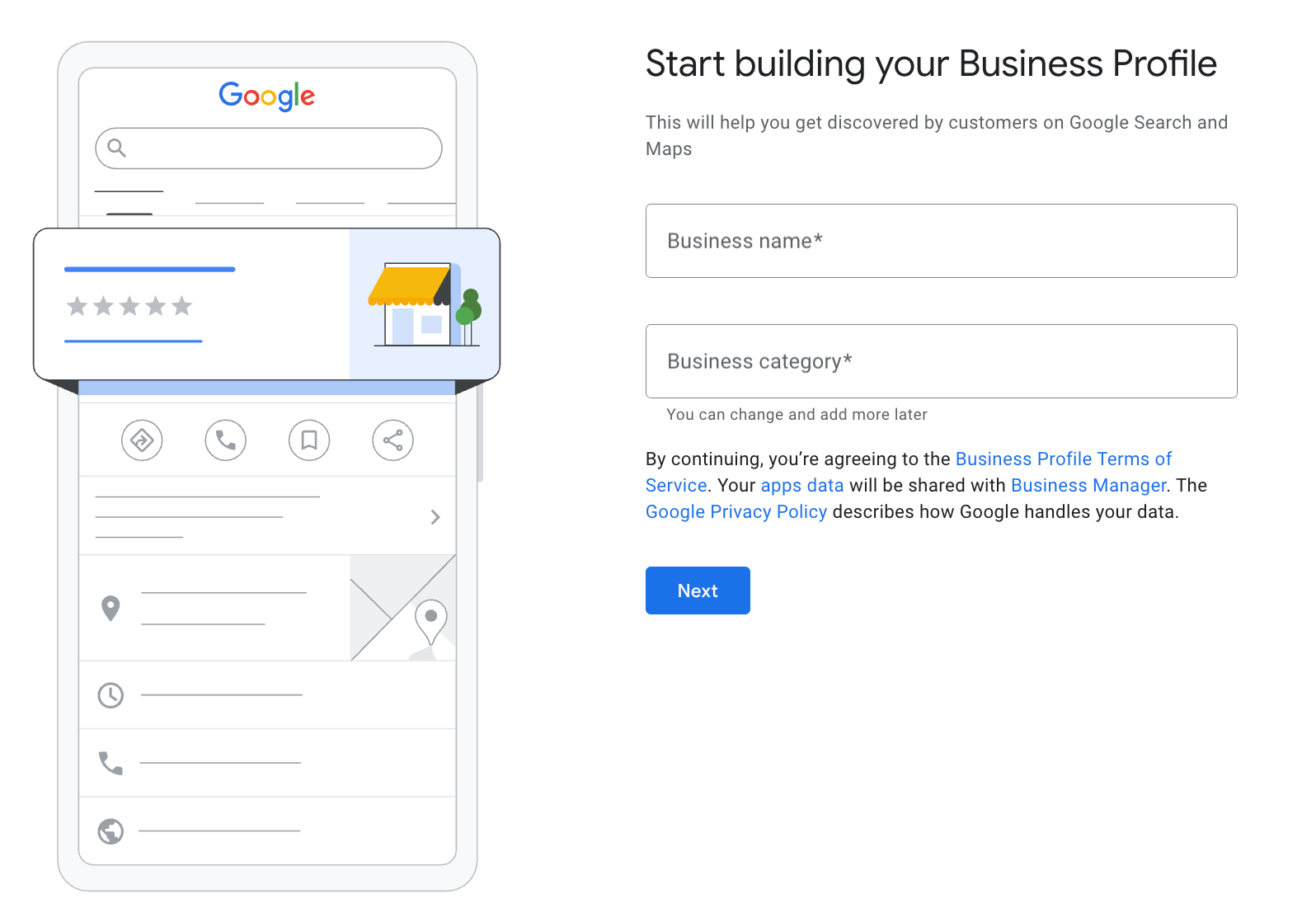
Step 2: Enter Your Business Name
Start typing your official business name. As you type, Google will show existing profiles that may match.
- If your business appears, select it to claim the existing profile. You will still need to prove you are the owner through the verification process.
- If your business does not appear, click "Create a business with this name" to start from scratch.
Expert Tip: The Business name is one of the most influential ranking factors on maps. Reach out to us to know how to use the Google Business name without violating Google's guidelines.
Step 3: Select Your Primary Business Category
This is one of the most critical steps for search relevance. Start typing the service you provide (e.g., "Plumber," "Hairdresser," "Solicitor"). Choose the most specific and accurate primary category that describes your main business function. You can add secondary categories later, but the primary one holds the most weight in Google's ranking algorithm.
Expert Tip: Search the keyword/s that you want your business to be ranked on Google Maps. Look at the "Primary Category" of the top 3 businesses already ranking. If it's relevant, ensure that you add the same category as your primary category.
Step 4: Add Your Business Location
Google will ask, "Do you want to add a location customers can visit, like a shop or office?"
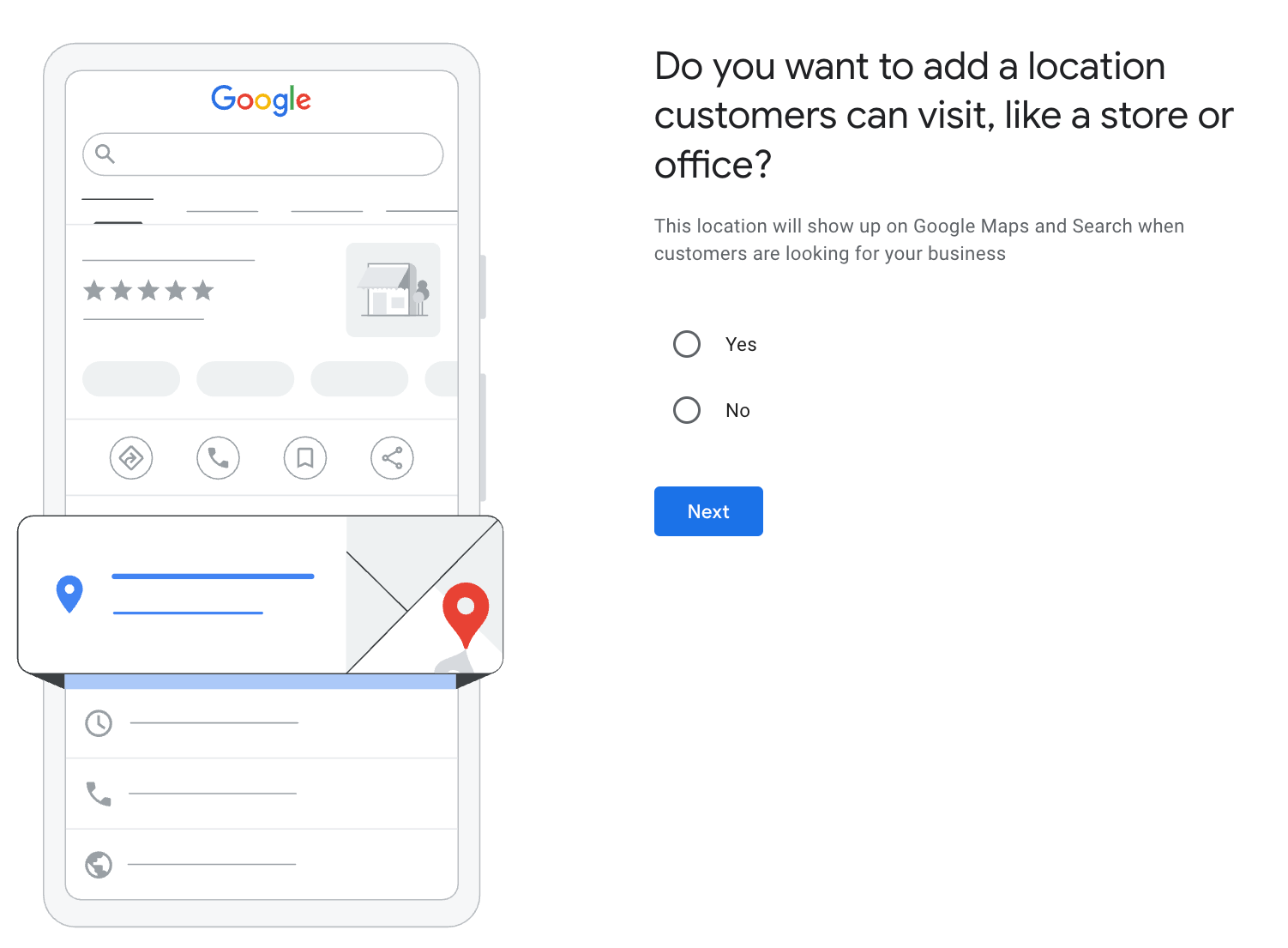
- Select "Yes" if you have a physical premises where you serve customers (e.g., a retail shop, restaurant, or clinic). You will then enter your full address.
- Select "No" if you are a Service Area Business (SAB), meaning you travel to your customers' locations (e.g., a mobile dog groomer, electrician, or landscape gardener).
Step 5: Define Your Service Area (For SABs)
If you selected "No" in the previous step, Google will now ask you to define the areas you serve. You can list specific towns, cities, or postcodes. This tells Google where to show your profile to potential customers, even though you don't have a public address.
Step 6: Add Contact Information
Enter your business phone number and website address. Adding your website URL creates a powerful link and drives traffic.
Expert Tip: NAP Consistency
The Name, Address, and Phone number (NAP) you enter here should be identical to how they appear on your website, social media profiles and other online directories. Use the same business description on all the profiles. Inconsistencies can confuse Google and harm your local search rankings.
Step 7: Verify Your Business Profile
Verification is the final, non-negotiable step that proves your business is legitimate and that you are its rightful owner. Without verification, you have limited control over your profile and it will not have full visibility.
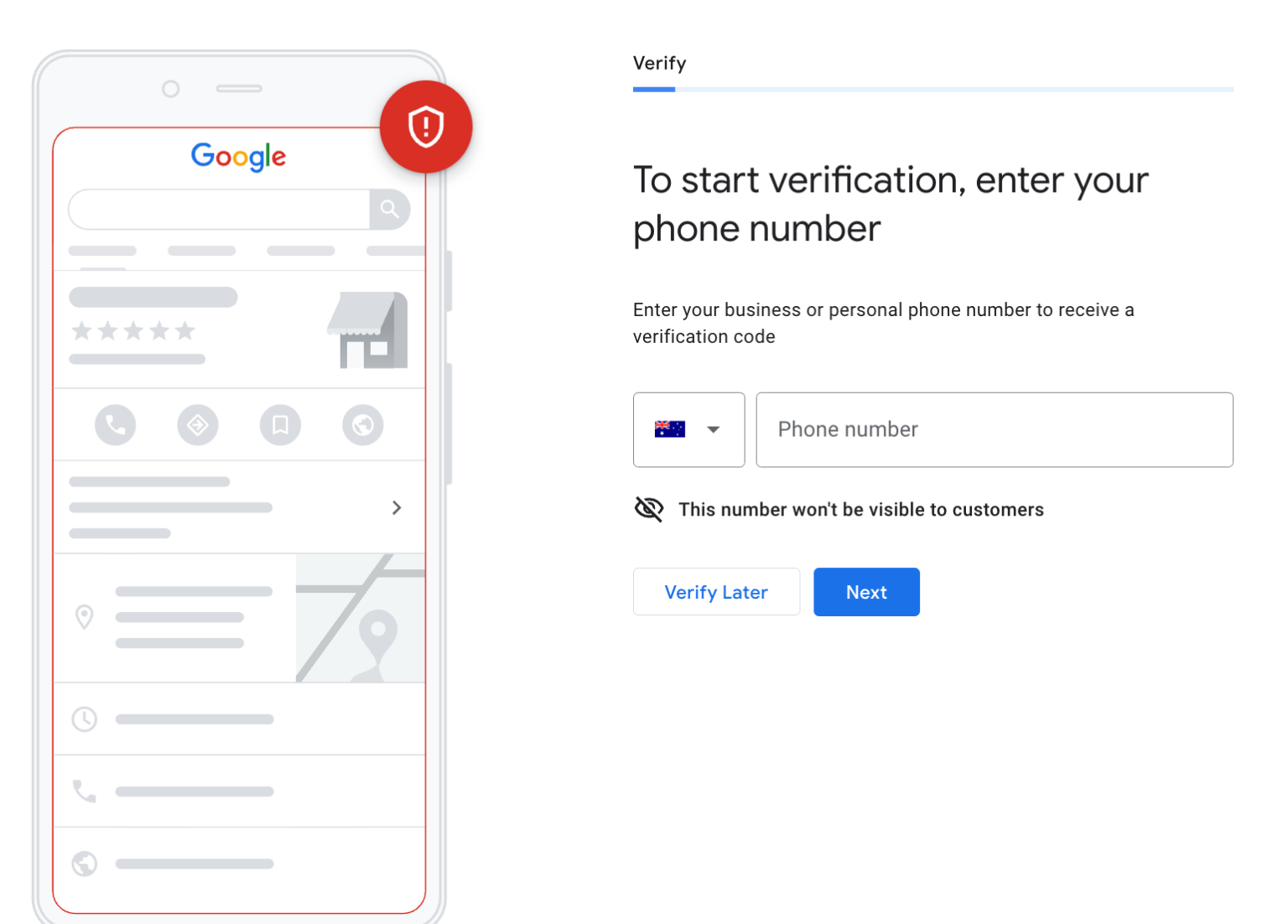
Common verification methods include:
- Postcard Verification (Most Common): Google sends a postcard with a 5-digit code to your registered business address. This usually arrives within 5–14 days. Once it arrives, you log back into your GBP dashboard and enter the code.
- Phone or Text Verification: Some businesses are eligible for verification via an automated call or text message to the business phone number.
- Email Verification: Available for certain businesses, where a code is sent to a business email address (e.g.,
you@yourbusinessdomain.com). - Video Verification: You may be asked to record a short video showing your business location, branding, equipment, and proof of management (like keys to the premises).
Important: Once you have submitted your verification request, do not change your name, address, or category, as this can reset the process.
What to Do After Verification: Optimise for Success
Creating the profile is just the beginning. To beat your competitors, you must treat your GBP as a living marketing tool. You can also reach out to us for a one-off Google Business Optimisation service.
You should:
- Complete Every Section: Add your opening hours, business description, and accessibility attributes.
- Upload High-Quality Photos & Videos: Show your premises, your team, your products, and your work in action. Profiles with more photos get more clicks and direction requests.
- List Your Services/Products: Use the dedicated sections to detail exactly what you offer. This helps you rank for more specific long-tail keywords.
- Use Google Posts: Share updates, offers, events, and news directly on your profile. Posts are a powerful signal to Google that your business is active.
- Encourage and Respond to Reviews: Customer reviews are a major local ranking factor. Actively ask happy customers for reviews and always respond professionally to all feedback, both positive and negative.
- Answer the Q&A Section: Proactively populate the Questions & Answers section with common customer queries. This saves you time and helps customers.
By following this comprehensive guide, you will not only create a Google Business Profile but also establish a powerful foundation for attracting more local customers and dominating your local market. For professional local SEO help, you can contact the SearchMinistry Media team.

Tharindu Gunawardana
Founder & Director, SearchMinistry Media
Tharindu Gunawardana is the Founder of SearchMinistry Media and a search strategist with 17 years of experience across Sri Lanka, Singapore, and Australia. A former Agency SEO Director, he specialises in helping brands transition from traditional SEO to AI-driven discovery. He is the creator of proprietary tools including Brandonomy.ai and SEOMigrator.io, focused on measuring and improving brand visibility within generative AI systems.