









Local SEO Melbourne

"Melbourne" in your title does not mean Melbourne-wide visibility. It means competing against every business in the city and losing to whoever is closest to the searcher. Melbourne has 314 suburbs, each with its own local pack and its own set of competitors. Suburb-level SEO creates a distinct ranking position for each area you serve, with local pack results typically appearing in 3 to 4 months for quieter suburbs and 6 to 9 months for inner-city areas.

Why Suburb-Level SEO Beats City-Level SEO

Google's local algorithm makes proximity the dominant ranking signal for suburb-level queries. A business 4km from Footscray will be outranked in "plumber Footscray" searches by a business 800m away, even with more total reviews. Ranking in Fitzroy does not carry over to Richmond. Each suburb's local pack has its own competitors and its own ranking context. Suburb pages that share 90% of their body copy, with only the suburb name swapped, are treated as thin content duplicates by Google's filters. Each suburb page needs at least 60% unique content.

Melbourne Suburb SEO Services

SearchMinistry's Melbourne suburb SEO service spans six signal categories: Google Business Profile optimisation, Google Maps Local Pack ranking, review management, suburb-level citation building, suburb-specific landing pages, and suburb keyword research. Each category targets a distinct layer of Google's local ranking algorithm.

  • Google Business Profile Optimisation: Google Business Profile signals account for 36% of local pack ranking weight. SearchMinistry optimises primary business category, suburb-level service areas, NAP accuracy, photo quality, and review velocity to maximise GBP's contribution to Local Pack positions across Melbourne suburbs.
  • Google Maps Local Pack Ranking: Google's Local Pack displays 3 businesses at the top of suburb-level search results, above organic listings. SearchMinistry builds suburb-specific GBP signals and citations to position your business in the Local Pack for each target Melbourne suburb.
  • Review Management: Reviews account for approximately 17% of local pack ranking factors. Reviews that mention a suburb name, such as "great plumber, fixed our pipes in Fitzroy", provide a direct suburb-level relevance signal that reinforces proximity signals for that suburb's local pack.
  • Suburb-Level Citation Building: Build citations with your NAP listed against each target suburb, reinforcing proximity signals for each local pack. Suburb-specific citations in Yelp, True Local, and Yellow Pages establish suburb-level entity connections.
  • Melbourne Suburb Landing Pages: Research and build suburb-specific landing pages for every area you serve, each with at least 60% unique content including local landmarks, housing context, and postcode references.
  • Suburb Keyword Research: Score each Melbourne suburb by search volume, competitive density, and proximity advantage, then build campaigns around suburbs where you can win fastest.

Our Process

SearchMinistry's five-step Local SEO process sequences audit, suburb keyword research, GBP optimisation, suburb page and citation builds, and ongoing suburb-level rank monitoring. Each step targets a distinct layer of Google's proximity, relevance, and prominence algorithm.

  1. Local SEO Audit: Analyse current GBP health, citation consistency, and competitor landscape across target Melbourne suburbs to identify ranking gaps.
  2. Suburb Keyword Research: Score each Melbourne suburb by search volume, competitive density, and proximity advantage, then prioritise suburbs where you can rank fastest.
  3. GBP Optimisation: Optimise primary category, suburb-level service areas, accurate NAP, and rich media that builds trust signals.
  4. Suburb Landing Pages and Citations: Build suburb-specific pages with at least 60% unique local content, then build matching suburb-level citations so NAP signals align with each target area.
  5. Ongoing Monitoring: Track rankings per suburb, reviews, and local pack visibility with regular reporting. Adjust target suburbs and content as rankings grow.

Google My Business Health Check Report

Every local SEO engagement begins with a branded GBP Health Check Report covering profile completeness, primary and secondary category selection, NAP accuracy, service area configuration, photo quality, review velocity, and a prioritised fix list ranked by ranking impact. The report is delivered as a PDF and walked through in a video call so every finding has a clear next action.

  • GBP completeness and category audit
  • NAP consistency check across 50+ sources
  • Review velocity and rating gap analysis
  • Prioritised fix list by ranking impact

Case Study: Pases Aqua's Expansion to Sydney

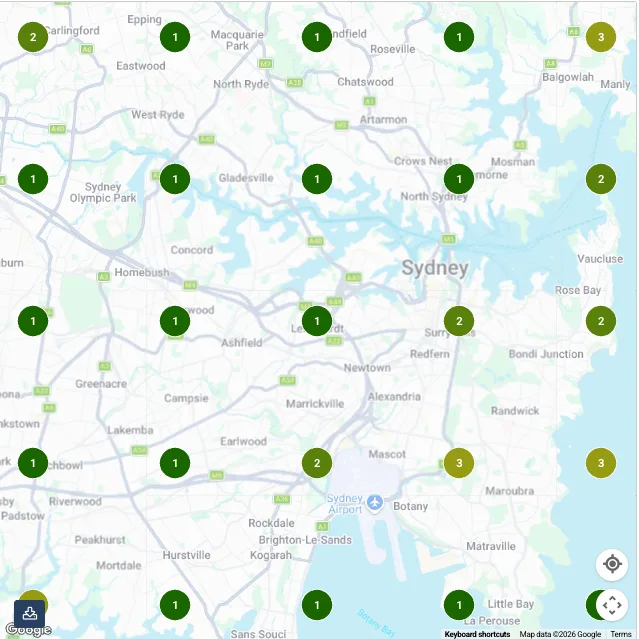
Pases Aqua expanded its pond and water feature services from Perth into the Sydney market, engaging SearchMinistry for suburb-level Local SEO. SearchMinistry built suburb-targeted GBP signals, suburb-level service area configuration, and location-specific citations across Sydney suburbs. Pases Aqua now holds #1 and #2 positions in the Google Maps Pack for its primary service keywords across Sydney.

Frequently Asked Questions

What is the difference between Melbourne SEO and Melbourne suburb SEO?
Melbourne SEO targets the city as a whole, competing against every business across 314 suburbs and 5.2 million people. Melbourne suburb SEO targets specific suburb-level queries like "electrician Fitzroy" or "plumber Richmond", each with its own local pack. Without suburb-specific pages, citations, and GBP signals, you will only rank near your physical address.
How long does it take to see results from Local SEO?
Suburb landing pages rank faster in lower-competition outer suburbs (8 to 12 weeks) and slower in inner-city suburbs with established competitors (4 to 6 months).
What Melbourne suburbs do you target?
We target any suburb within your realistic service radius. Common starting suburbs include Fitzroy, Richmond, South Yarra, Collingwood, St Kilda, Prahran, and Carlton, with campaigns expanding outward as rankings are established.