What Is NAP Consistency?
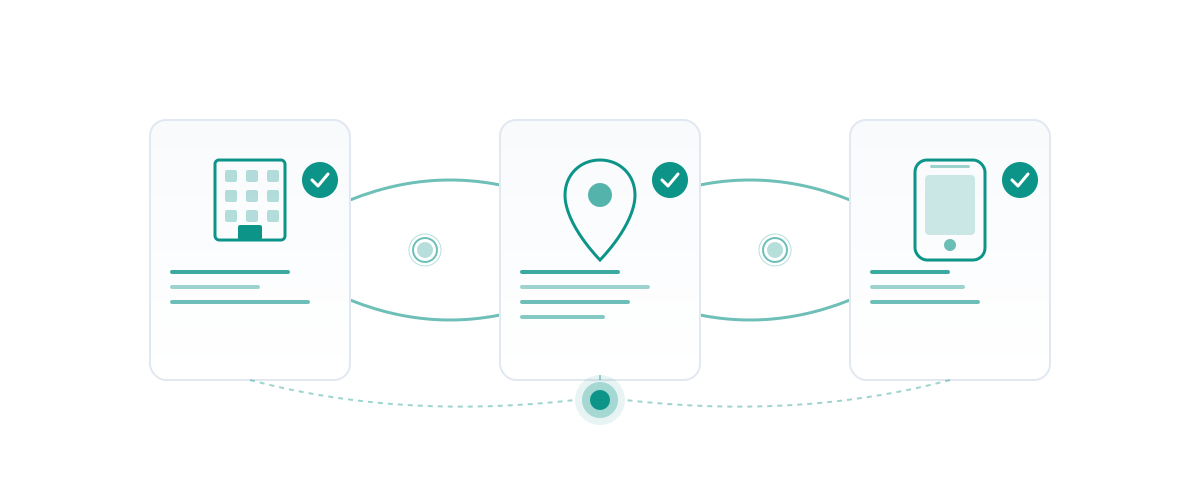
NAP consistency means that your business name, street address, and phone number are formatted and displayed in exactly the same way across every website, directory, social platform, and listing where your business appears.
This includes your own website, your Google Business Profile, directory listings like Yelp and Yellow Pages, social media pages, and any other platform that displays your business contact details.
Most businesses accumulate NAP variations over time without realising it: an old phone number from a previous plan, a slightly different business name on a directory that auto-populated from a data aggregator, an address that uses "Street" on one platform and "St" on another. Each variation introduces a conflicting signal into the data layer that search engines use to verify your business identity, and those conflicts compound with every new listing added on top of them.
Why NAP Consistency Matters
Search engines use citations (mentions of your business on other websites) as trust signals. When Google finds the same business name, address, and phone number on multiple independent sources, it gains confidence that the business is real, legitimate, and located where it claims to be.
When those details conflict across sources, the opposite happens. Google becomes uncertain about which information is correct. This uncertainty directly impacts your visibility in local search results, particularly in the Local Pack.
The effects of inconsistent NAP data include:
- Lower local rankings: Google's local ranking system builds an entity confidence score from corroborating citation signals. When your NAP details conflict across sources, Google cannot confirm the entity with high certainty. Lower entity confidence reduces the weight your business carries in the local pack algorithm, directly depressing your position relative to competitors with clean, uniform listings.
- Reduced customer trust: When a potential customer finds two different phone numbers for your business across two directories, they cannot tell which is current. That ambiguity increases the likelihood they contact a competitor instead. Trust is lost before the first conversation.
- Lost leads from wrong contact details: An incorrect phone number on a high-traffic directory means every call attempted from that listing fails to reach you. An outdated address sends people to the wrong location. Neither failure is recoverable in the moment it happens.
- Duplicate listings that split your authority: When your business name or address appears in enough variations, directories treat each variant as a separate business entity. Reviews, ratings, and citation weight accumulate across multiple listings instead of concentrating on one, weakening the ranking signal each individual listing sends.
Common NAP Inconsistencies
Most NAP problems fall into predictable categories. Recognising them helps you audit and fix your listings faster:
Business name variations
- "Smith's Plumbing" vs "Smith's Plumbing Pty Ltd" vs "Smiths Plumbing Services"
- Including or excluding legal suffixes (Pty Ltd, Inc, LLC)
- Abbreviations vs full words ("Melb" vs "Melbourne")
Address formatting differences
- "St" vs "Street", "Rd" vs "Road", "Ave" vs "Avenue"
- Including or excluding suite/unit numbers
- Including or excluding suburb, state, or postcode
- Old addresses from previous locations
Phone number formatting
- "(03) 9123 4567" vs "03 9123 4567" vs "+61 3 9123 4567"
- Old phone numbers that were never updated
- Using a mobile number on some listings and a landline on others
How to Audit Your NAP Data
A NAP audit identifies every place your business appears online and checks each listing against your official business information. Here is a systematic approach:
Step 1: Define your master NAP
Before auditing anything, decide on the exact format of your business name, address, and phone number. Write it down. This becomes your reference point for every listing.
For example:
Name: Melbourne Coffee Co.
Address: 123 Collins Street, Melbourne VIC 3000
Phone: (03) 9123 4567
Step 2: Search for your business online
Search Google for your business name, phone number, and address. Check the first five pages of results. Also search on Bing. Document every listing you find in a spreadsheet, noting the platform, URL, and the NAP data displayed.
Step 3: Compare against your master NAP
Flag every listing where the name, address, or phone number does not exactly match your master format. Even minor differences (like "St" instead of "Street") should be noted.
Step 4: Categorise issues by severity
- Critical: Wrong phone number, wrong address, wrong business name (misleading)
- High: Old address from a previous location, discontinued phone number
- Medium: Name variations that are recognisably the same business
- Low: Minor formatting differences (abbreviations, spacing)
Fixing NAP Inconsistencies
Once your audit is complete, work through fixes in order of severity:
Claim and correct listings you control
Start with platforms where you can log in and edit your listing directly: Google Business Profile, Facebook, Yelp, Yellow Pages. Update each one to match your master NAP exactly.
Contact platforms you cannot edit
For listings you did not create or cannot claim (blog mentions, news articles, third party directories), contact the website or platform and request a correction. Many directories have a "suggest an edit" or "report an issue" feature.
Remove duplicate listings
If a directory has two or more listings for your business, request that the duplicates be merged or removed. Keep the listing with more reviews or history, and redirect the others.
Update your own website
Ensure your website footer, contact page, and any location pages display your master NAP. If you use LocalBusiness or Organisation schema markup on your site, verify that the structured data matches your master NAP as well.
NAP Best Practices
Follow these practices to maintain clean NAP data over time:
- Document your master NAP: Keep a written record of the exact format. Share it with anyone who manages your listings or creates directory submissions.
- Use consistent formatting everywhere: Choose "Street" or "St" and stick with it. Choose one phone format and use it on every platform.
- Update all listings when anything changes: If you change your phone number, move offices, or rebrand, update every listing. Not just the ones you remember.
- Schedule regular audits: Quarterly audits catch problems before they accumulate. Set a calendar reminder.
- Match schema markup to citations: The NAP in your website's structured data should be identical to the NAP on your directory listings.
- Avoid tracking phone numbers on citations: Using different tracking phone numbers on different directories creates inconsistency. If you need call tracking, use it only on your own website or paid ads.
How NAP Consistency Affects Local AI Search Visibility
NAP consistency is not a one time cleanup task. It is an ongoing discipline that underpins your entire local SEO strategy. Here is how to approach it:
- Start with your Google Business Profile: This is the single most important listing. Every other citation should match it exactly. Our complete GBP optimisation guide covers every profile field, feature, and ranking signal in detail.
- Fix before you build: Adding new citations on top of existing inconsistencies amplifies the problem. Each new inconsistent citation increases the variance in Google's entity model, which makes the entity harder to resolve with confidence, not easier. Clean up the existing foundation first, then expand.
- Treat NAP as entity data: Search engines use named entity recognition to group all web mentions of a business into a single entity node in their knowledge graph. When your business name varies across sources, the system must assess whether "Melbourne Coffee Co." and "Melb Coffee Company" are the same entity. Lower confidence in that assessment reduces the citation weight assigned to each mention, pulling your local rankings down across all of them.
- Combine with schema markup: Adding LocalBusiness schema to your website with matching NAP data creates a strong, machine readable signal that reinforces your citation data.
- Monitor competitor consistency: If your competitors have messy citations, maintaining clean NAP data gives you a competitive advantage in local rankings.
Frequently Asked Questions
What does NAP stand for in SEO?
NAP stands for Name, Address, and Phone number. These three data points are the minimum information required to locate and contact a physical business, which is why search engines treat them as the core identifiers for a local business entity. When all three appear identically across many independent sources, Google can confirm the entity with high confidence. That confirmed entity status is what enables local pack and map visibility.
Does NAP consistency really affect local rankings?
Yes, and the mechanism is direct. Google's local ranking system aggregates citation signals from across the web to build an entity confidence score for each business. When multiple authoritative directories show the same NAP, the confidence score rises. A higher confidence score increases the weight that business carries in the local pack algorithm. When NAP details conflict, the confidence score falls because Google cannot determine with certainty which version is correct. Lower confidence means lower local pack weight, which means lower rankings. Businesses with clean, consistent NAP data outrank businesses with identical review counts and proximity simply because their entity is more definitively confirmed.
Does the phone number format matter for NAP consistency?
Yes. The audit standard is exact match, not approximate match. Choose one format, such as (03) 9123 4567, and use it identically on every platform. Minor format variations introduce ambiguity into Google's entity model. Even if Google parses two formats as the same number, inconsistency signals that different parties have submitted different data, which reduces the corroboration value of each citation. Exact consistency maximises the entity confidence signal each matching citation provides.
How often should I audit my NAP data?
Audit your NAP data at least quarterly. Data aggregators can overwrite your manually corrected listings when they push updates from their databases. New duplicate listings appear from third-party scrapes of outdated sources. Without regular monitoring, corrections made in one quarter can be undone by the next. Quarterly audits catch these reversals before they accumulate enough conflicting signals to affect your rankings.
Should I include "Pty Ltd" in my business name on citations?
Use whatever format matches your Google Business Profile listing exactly. If your GBP shows "Smith's Plumbing" without "Pty Ltd", that becomes your master NAP name and every other listing should match it. The entity confidence signal comes from corroboration across sources, so which format you choose matters less than choosing one format and applying it everywhere without exception.

Tharindu Gunawardana
Founder and Director of SearchMinistry
Tharindu Gunawardana is the Founder of SearchMinistry Media and a search strategist with 17 years of experience across Sri Lanka, Singapore, and Australia. A former Agency SEO Director, he specialises in helping brands transition from traditional SEO to AI-driven discovery.