SEO Recovery and Risk Audit
Organic traffic drops from different causes require different recovery strategies. The wrong strategy wastes months. A recovery audit identifies the exact cause before any remediation begins.
SearchMinistry Media's recovery and risk audit systematically rules out each possible cause of an organic traffic drop: Google manual action, algorithmic core update impact, technical site change, and competitive displacement. We cross-reference traffic drop dates against all known algorithm updates, conduct a full technical crawl, audit content quality, and review the link profile before issuing a root cause diagnosis and a structured recovery roadmap.
Request Your Recovery Audit
Root cause identified, recovery roadmap produced, remediation supported.
Request Your Recovery Audit
Root cause identified, recovery roadmap produced, remediation supported.
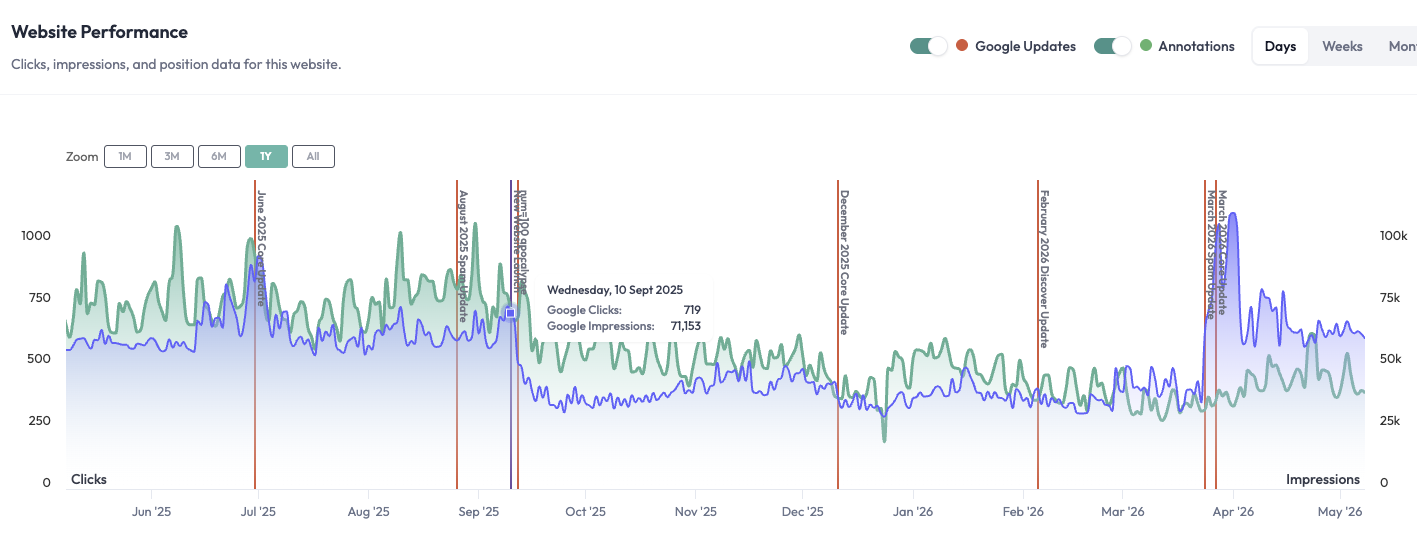
What a Traffic Drop Looks Like in Google Search Console
Each vertical red line marks a confirmed Google algorithm update. The drop in September 2025 coincides with a known core update, dropping clicks from a peak of around 1,000 per day to below 500. Correctly identifying this as an algorithmic impact (not a manual penalty) determines the entire recovery strategy.
Four Root Causes of Organic Traffic Drops
Each cause requires a fundamentally different recovery strategy. Applying the wrong strategy not only fails to recover the lost traffic but can make the situation worse. The recovery audit diagnoses which cause is at play before any implementation begins.
Manual actions appear in Search Console under Security and Manual Actions. Recovery requires: identifying every policy violation, complete remediation, disavow file submission for link-related actions, and a reconsideration request documenting all changes. Recovery takes 4 to 12 weeks after a successful request.
Algorithmic impacts do not trigger Search Console notifications. They require content quality improvements: stronger entity coverage, original expertise-based content, improved E-E-A-T signals, and structural content improvements. Recovery is confirmed at the next core update cycle, 2 to 4 months later.
A robots.txt misconfiguration, accidental noindex deployment, canonical tag change, or URL restructure can cause a traffic drop identical in shape to an algorithm impact. The technical audit component of the recovery audit identifies and rules out or confirms these causes within 48 hours of the investigation starting.
Stronger entities, including major brands, government sites, and well-resourced publishers, progressively claim ranking positions. No penalty or technical issue is present. Recovery requires entity authority building, content depth improvements, and digital PR to strengthen the link profile in the affected topic cluster.
Recovery Audit Methodology
Timeline Cross-Reference
We map your traffic drop date against all known Google algorithm updates using Google Search Central announcements. If the drop date aligns with a confirmed update, the cause is algorithmic. If it pre-dates all updates or coincides with a site change, we investigate technical causes first.
Google Search Console Diagnosis
We review the Manual Actions report, Coverage report, Page Experience report, and Core Web Vitals report for notifications and anomalies. We compare pre-drop and post-drop query data to identify which query types and page categories were most affected.
Technical Crawl and Content Audit
A full site crawl rules out technical causes: robots.txt changes, canonical conflicts, noindex deployments, and redirect failures. A content quality sample across the affected pages assesses E-E-A-T signals and entity coverage against current ranking pages.
Link Profile Review
We review new referring domains acquired in the 6 months before the drop for manipulative patterns. If a Google Spam update date aligns with the traffic drop, we conduct a full toxic link audit and prepare a disavow file.
Root Cause Report and Recovery Roadmap
The audit concludes with a confirmed root cause diagnosis, a prioritised recovery action list, timeline estimates for each recovery stage, and KPIs to measure progress at each checkpoint.
Frequently Asked Questions
Lost Rankings Need the Right Recovery Strategy
Request a recovery audit to diagnose your situation accurately, or read our guide on why websites lose rankings to understand the recovery framework in detail.